Space technologies and human astronautics
Train for the next era of space exploration – from life support systems and space habitats to astronaut psychology and analogue mission simulation.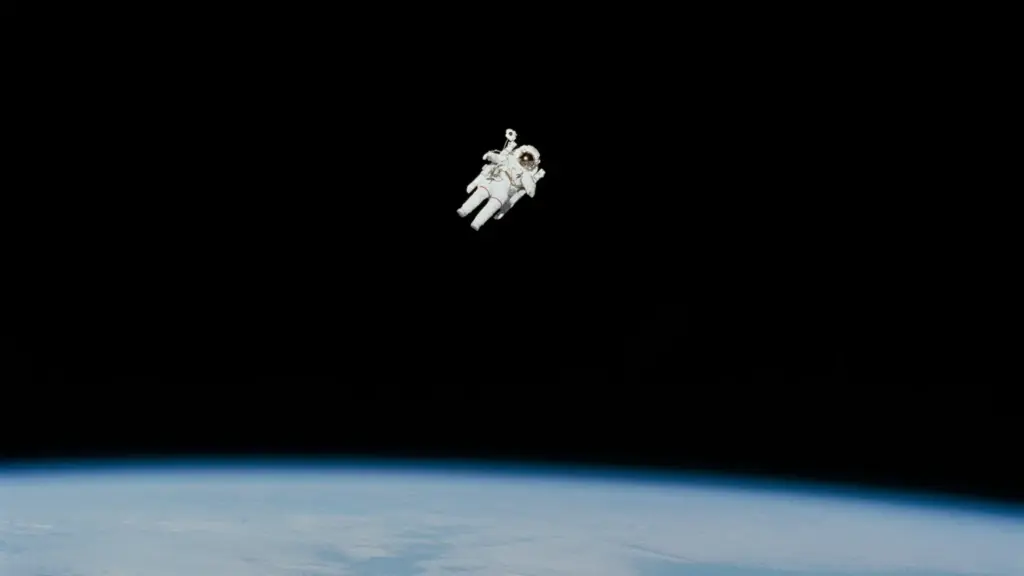
About the course
How do humans live and work in space for months or even years? What technologies, systems, and environments are needed to make that possible, on the Moon, Mars, or beyond?
We’re no longer just reaching space – we’re preparing to live there. With new moon missions, Mars programs, and commercial space habitats on the horizon, this course prepares you to contribute to one of humanity’s most ambitious challenges: sustaining life beyond Earth.
Train for the next era of human space exploration.
This course explores the human side of space missions, focusing on the technologies, strategies, and challenges behind long-duration spaceflight, astronaut training, and life beyond Earth. From space habitats and life support systems to the psychology of isolation and the simulation of missions here on Earth, you will gain the tools and mindset of a next generation space explorer.
Whether you’re aiming to work in space systems design, human factors, or analogue research missions, this course will ignite your journey into the future of space.
General information
The course aims to blends hands-on insights, and basics engineering theories for real-world applications, and the latest in space exploration research:
- Human spaceflight technologies: Discover the systems that sustain human life in space—environmental control, oxygen recycling, radiation protection, waste management, and more.
- Space habitats & living conditions: Explore how spacecraft, space stations, and planetary bases are designed for comfort, efficiency, and safety in microgravity or hostile environments.
- Space medicine & psychology: Learn how isolation, confinement, and the space environment affect the human body and mind—and how to prepare for it.
- Mission simulation & analogue environments: Understand how Earth-based simulations help us prepare for Moon and Mars missions using analogue stations and research techniques.
- Human-centered mission cesign: Approach space mission planning with humans at the core—balancing engineering with psychology, ethics, and sustainability.
- Emerging trends in exploration: From commercial space stations to Moon bases and Mars settlements, explore where humanity is headed next.
- (Optional) Field activities (TBC): Possible visits to space-related facilities or participation in analogue mission tasks.
How to apply
Apply to all Tracks courses at antagning.se / universityadmissions.se
Search for the course code TRA495
To assess your application, please provide us with a short motivation letter (max. 1 page). The letter of motivation requested is an opportunity for each student to express specific interests and experience that cannot be seen from transcripts only. The purpose of the motivation letter is to assist the teachers in grouping students with respect to background and interests. In addition, it is possible to upload a CV that may provide additional background experience that may be relevant.
Upload the letter of motivation on your account at antagning.se / universityadmissions.se.
More information on how to select courses
Details
Teachers:
- Course coordinator: Patxi D. R. Acero, patxi@chalmers.se.
- Examiner: Tomas Gönstedt, tomas.gronstedt@chalmers.se
Course dates: Study period 1-2
Credits: 7.5
Level: Advanced (A)
Course code: TRA495
Language of instruction
English
Tracks – a unique concept
These courses provide hands-on experience solving real-world problems, fostering a collaborative mindset, and expanding your professional network. Operating in close partnership with industry, society, and cutting-edge research, Tracks courses are also continuously changed to be as up to date as possible.
Collaboration and entrepreneurship
With a Tracks course, you will become better at collaborating with people from different countries and backgrounds. You will also learn more about ethics, communication, and entrepreneurship. These skills will equip you with a head start in working life. When you take a Tracks course, you also work in our brand-new makerspace: Fuse, which is a creative meeting place with 3D printers, a variety of studios, and workshops where your creativity can flourish.
If you have already attended Chalmers and chosen to take a Tracks course, you will have the advantage of familiarizing yourself with a current critical subject and building on your current knowledge. Together with other engineers, architects, and entrepreneurs of the future, you will gain new perspectives in your future professional life.
Most Tracks courses use Chalmers makerspace Fuse – a creative meeting place where education, research, industry and the community come together to test and implement ideas.
Register today
Register now
Course Participant profile
Open to PhD, Master’s, and final-year Bachelor’s students from all Chalmers programs.
Whether your background is in engineering, design, industrial management, physics, biology, psychology, or systems thinking.
If you’re passionate about the human future in space – you belong here!